

Biz İstanbul
İstanbul’da yaşamış, İstanbul’dan tat almış, İstanbul’a tat vermiş herkes için…
Dance
45 Minutes
8+
Consulate General of India in Istanbul & Ataturk Cultural Center in association with Seher present
Choreographed by Sanjukta Wagh and Beej
Dancing wisdoms across the silk route through words of Sufi seers, Jalauddin Rumi and Amir Khusrau
Introduction:
The Silk Route facilitated the spread of Sufism from Central Asia and the Ottoman Empire to India. Sufism, a mystical Islamic tradition, was carried along the Silk Road by merchants, scholars, and Sufi saints, reaching various parts of India, including Delhi and the Bengal region The Persian language, the main language of Sufi thought, linked courts, khanqahs (Sufi lodges), and caravanserais from Central Asia through Persia to Anatolia and the Indian subcontinent. From Constantinople to Delhi, Sufi mystics, scholars, poets, and musicians traversed this route, carrying not only silks and spices but verses, visions, and veils of the unseen.
In Türkiye, Sufi thought blossomed through the teachings of Mevlana Jalaluddin Rumi, with the greatest imprint of his personality most visible in the region traversed by the silk route. Though Rumi now has a global appeal, traditionally he lived, studied, travelled, interacted, worked and left his legacy within and around the Silk route region. Indian Sufism, particularly the Chishti and Suhrawardi orders, was deeply influenced by mystical ideas traveling through the Silk Route. The Indo-Turkic rulers who came through Central Asia brought with them Persianate culture, literature, and Sufi cosmology. Indian Sufi poets such as Amir Khusrau were shaped by this blend, composing in Persian and Hindavi, and creating musical traditions like qawwali that married Turkic, Persian, and Indic sensibilities.
Proposal:
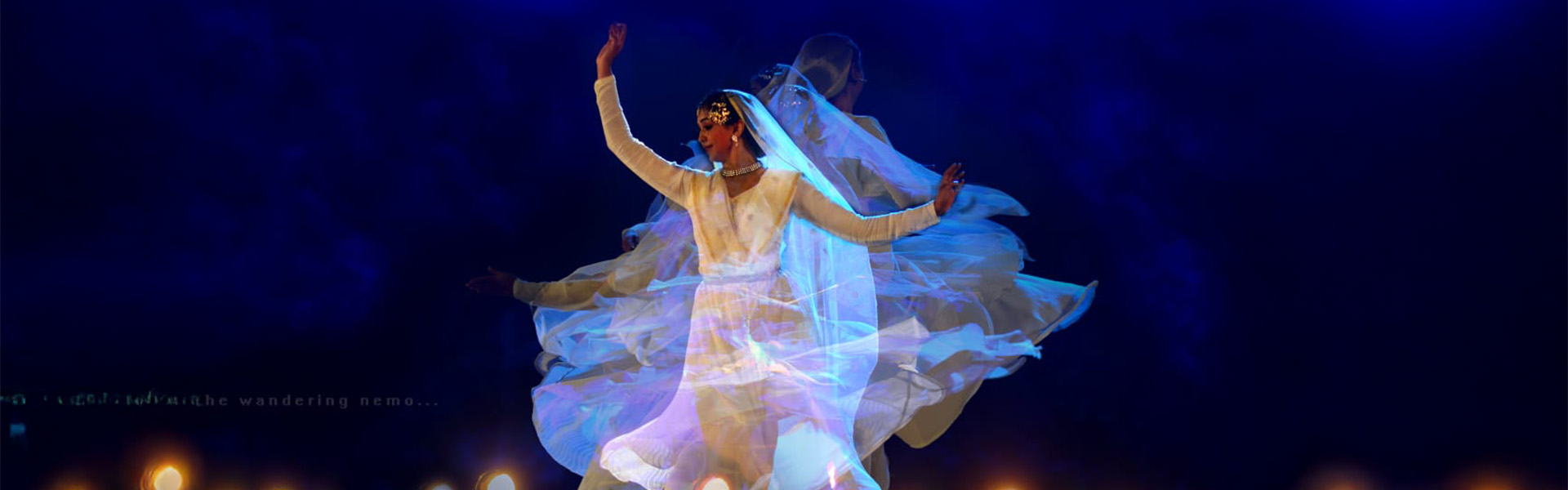
SEHER proposes a unique cultural interplay showcasing the connection between Rumi’s teachings of Türkiye and Khusrau’s poems of India on the 25th January, 2026 at the Ataturk Cultural Center, Istanbul, Türkiye. This one-of-a-kind showcase will represent Kathak – a Classical danceform from India in collaboration with Kurdish music played with their indigenous instruments like Tembur, Duduk, Zurna etc. The event will be open to public through registration and tickets.Kathak is a musical dance-theatre form that is an amalgam of the free-flowing folk art of singing bards and storytellers and intricate formalized court-dances. The assimilative movement vocabulary has drawn from diverse sources from the whirling dervish to rajasthani folk pirouettes and even Russian ballet, from court adakaari or miniature delicacy of Lukhnow, to intricate Jaipur tatkaar or foot patterns. The rich repertoire of the form is largely influenced by sufi and bhakti poetry and philosophy. The Persian language is woven into the Kathak aesthetic in compositions like aamad, salaami and gat nikaas which are living practices of a shared cultural legacy.In Raqs e Danaai the dancer’s body becomes a vehicle or carrier of poetic wisdoms of Rumi and Khusrau. In an ode to the fleeting essence rooted in form but touching formlessness, each gesture, movement phrase or sonic flourish builds a mahaul or an atmosphere that holds not just the words of the poems but the silences between words. The choreography straddles languages of love andloss musically bringing together folk and classical music along with spoken text and rhythms. Kathak with its inextricable connection with the Persian aesthetic becomes a vehicle to take the spectators on this sensorial journey across countries and cultures to seek and perhaps meet glimpses of the beloved within themselves. Raqs e Danaai is a celebration of shared histories and languages forging new connections between past and present, the body and the spirit, the dancer and the dance.
Why Ataturk Cultural Centre?
This kind of a unique cultural endeavor requires a suitable venue to make it into a wholesome, memorable experience for the audience along with awareness and promotion of the concept and the intention behind this program. Atatürk Cultural Centre is such a venue as it has become a symbol for Istanbul’s identity.AKM, which presents much more than a building and has become a concept of its own, is the common ground where art and culture meet with the public. Buildings can be burned down or destroyed, but a concept would survive.
The Artists:
Performer-choreographer, writer, curator, teacher and co- founder of Beej, Sanjukta Wagh has trained extensively under Rajashree Shirke in Kathak and Pandit Murli Manohar Shukla in Hindustani Music. Her engagement with theatre honed by playwright-director Chetan Datar and Navarasa Sadhana training with G Venu, her year-long experience at the Trinity Laban school of Dance, London, along with her love of literature and deep unease with comfort zones, have led to her interdisciplinary and exploratory mode of work. Sanjukta has developed a unique language of dance theatre that uses the Kathak language as the foundation to build on and draws from her experience of contemporary dance, theatre, literatüre and hindustani music. She composes original music and sound scores for her work. Her collaborative dance choreographies and dance-theatre works have won her critical acclaim across the country and abroad at several festivals across the globe including Erasing Borders and World Music Institute’s Dancing the Gods, New York, Facing East Festival, Philadelphia, South Bank Centre’s Alchemy Festival, London and Danza Activa, Puerto Rico, The Stuttgart Festival, Germany among others. Sanjukta has been honoured with several awards and scholarships including the Cooper Foundation Exchange scholar Grant, at Swarthmore College, The All-India Aditya Birla Kala Kiran Award for Classical Dance, the META award for best actress in the lead role for her work Rage and Beyond, the Vinod Doshi award for significant work in performing arts, British Council’s Charles Wallace Scholarship among others. Her literary and musical sensibility and interdisciplinary research on movement improvisation as a studio-based practice and as performance along with her exploration of dance as music and to live music in real time has led to several one - on- one collaborations, collaborative performances and embodied wisdoms which she has been sharing in workshops for performing arts students around the country. Neha Kudchadkar is a visual and performing artist and co-founder of beej. She is a graduate of the Royal College of Art, London, and the Faculty of Fine Art, M.S.U., Baroda. She has trained in Kathak under Rajashree Shirke. Neha has chosen to negotiate various roles – dancer, ceramicist, activist, curator, teacher, choreographer, collaborator – that inform one another and broaden her approach as an artist and maker. Abhay Tole Trivedi is a dancer and researcher based in Mumbai. He recently graduated from Ashoka University, Delhi, where he studied History and Performing Arts. Abhay’s is repertory artist and assistant teacher at beej, an interdisciplinary intiative . He has extensively trained in Kathak under Sanjukta Wagh and has been part of several beej productions. He has also done creative collaborative work with theatre at Ashoka University department of performing arts. Abhay has been researching the ghungroo (semi-enclosed ankle-bells) and the ghungroo makers of Jalesar, Uttar Pradesh, through written and performed approaches.
İstanbul’da yaşamış, İstanbul’dan tat almış, İstanbul’a tat vermiş herkes için…
Divan Group, which develops its modern understanding inspired by the future, has a strong structure which includes hotels, bakeries, restaurants, cafeterias, shopping, and visiting spaces.
...
Sometimes a pleasant smell of coffee filling your nose as you leave the theatre hall, sometimes a bar of chocolate that raises a smile before an entertaining concert…